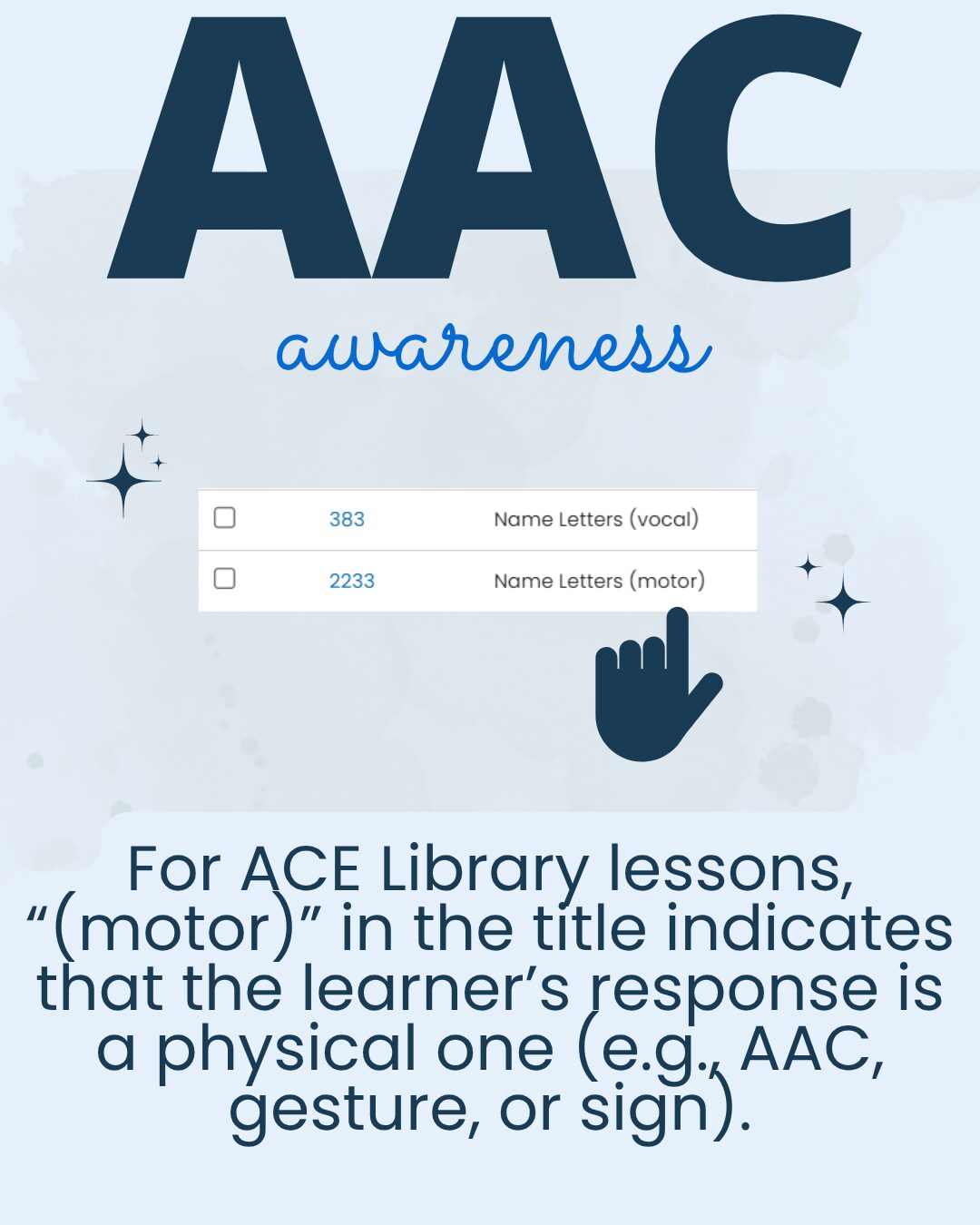
AAC stands for Augmentative and Alternative Communication.
This includes all forms of communication (other than oral speech) that are used to express thoughts, needs, wants and ideas.
AAC is essential in education because communication is the foundation of learning, participation, and belonging. When students have access to AAC, they gain equitable opportunities to engage academically and socially alongside their peers.
When AAC Opens Doors: Collaboration, Music & Belonging
Music has a unique way of bringing people together, creating space for expression, connection, and joy. One moment in particular captured the true power of music as a collaborative experience supported by AAC.
A non-speaking student had been quietly observing their housemates rehearse for the annual chorus concert. As the group sang, something shifted. The student suddenly ran onto the stage, smiling and laughing, and stood among the singers. The message was clear—they wanted to join in, to make music with their peers.
Recognizing this moment as an invitation rather than an interruption, music teacher Nadia Castagna partnered with the student’s speech-language pathologist (SLP) and education coordinator to explore how music and AAC could work together meaningfully. The goal was not to create a separate role, but to support authentic musical participation and shared ownership of the performance.
The team turned to the student’s AAC system as a musical instrument and communication tool. Using Proloquo2Go, they collaboratively programmed phrases from the chorus repertoire, carefully adjusting pitch, tone, and duration so the AAC output blended naturally with the ensemble. Instead of programming entire songs, they focused on short musical phrases, allowing the student to initiate and contribute independently—just like their peers.
Using a master AAC device alongside a keyboard and ukulele, the team matched musical notes to the correct pitches while considering tempo, phrasing, and timing. Practice materials, recordings, and clear expectations for minimal prompting supported both musical accuracy and communicative autonomy.
The outcome was powerful. During rehearsals and performances, the student used their AAC device to “sing” alongside classmates, participating as a full member of the chorus. Music became a shared language—one that honored the student’s voice and allowed peers to experience collaboration in a new and meaningful way.
This experience reminds us that inclusive music education is not about adapting students to fit music, but about expanding music to welcome every communicator. When AAC and music work together, they open doors to expression, belonging, and joy—and ensure that every voice has a place in the song.